Key highlights
- Hardwood works in most kitchens with a durable finish, a harder species and quick cleanup of spills.
- The real risk is water that sits, like a slow dishwasher or sink leak. A leak sensor is the best protection.
- Site-finished hardwood runs $13–$17 per square foot in Raleigh-Durham, roughly $2,600–$3,400 for a 200-square-foot kitchen.
The kitchen is the busiest room in most homes. It sees spills, dropped pans, pets, kids and more foot traffic than any other room. So it’s fair to ask whether hardwood belongs there at all.
The short answer: for most households, yes. Hardwood works well in a kitchen when you choose the right wood, the right finish and a few simple habits. We’ve been installing and refinishing kitchen floors across Raleigh, Durham, Cary and the Triangle for over 25 years, and this guide covers the honest pros and cons, plus what we recommend to make a hardwood kitchen last.
Pros of hardwood floors in the kitchen
It flows with the rest of your home
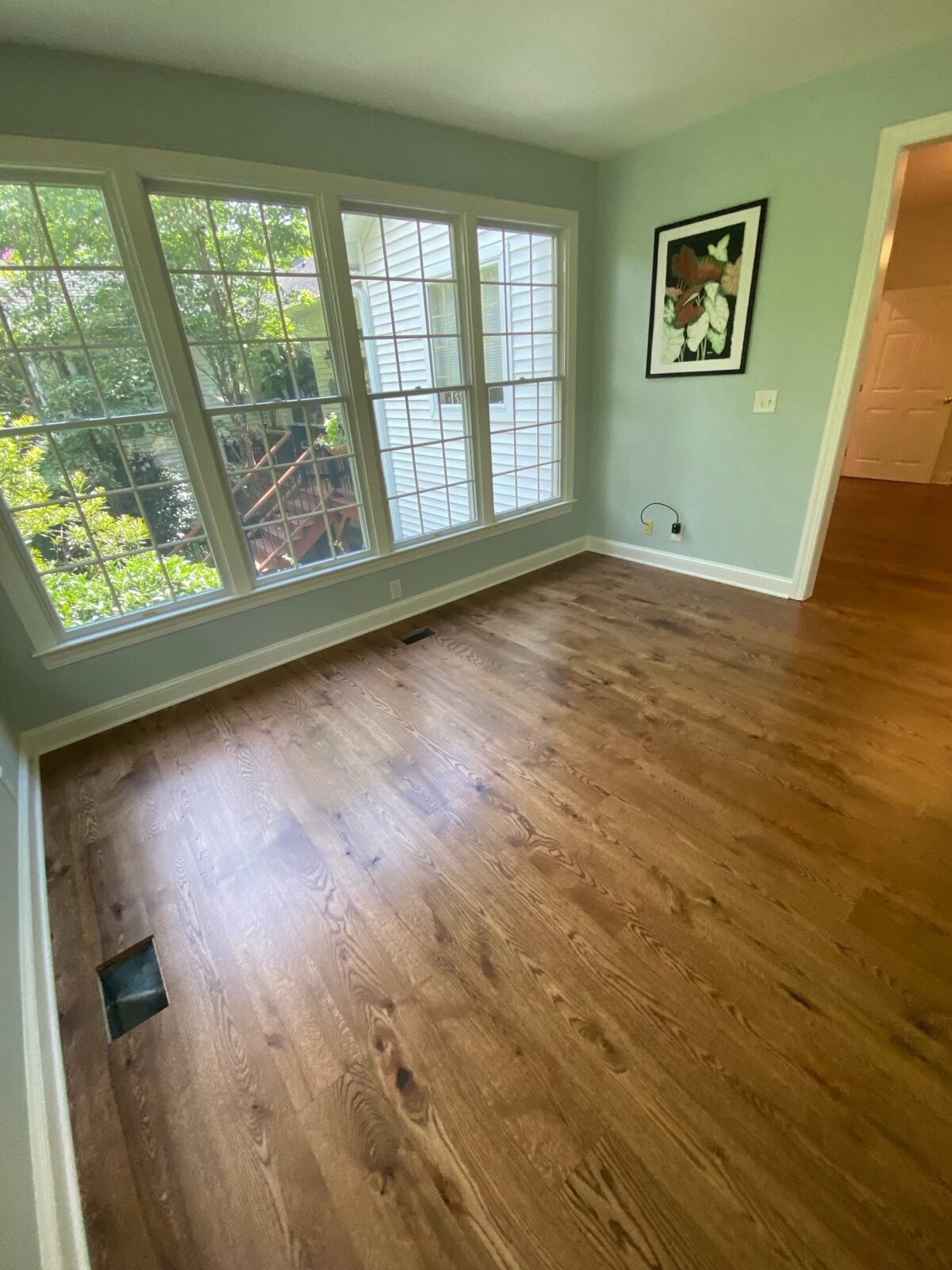
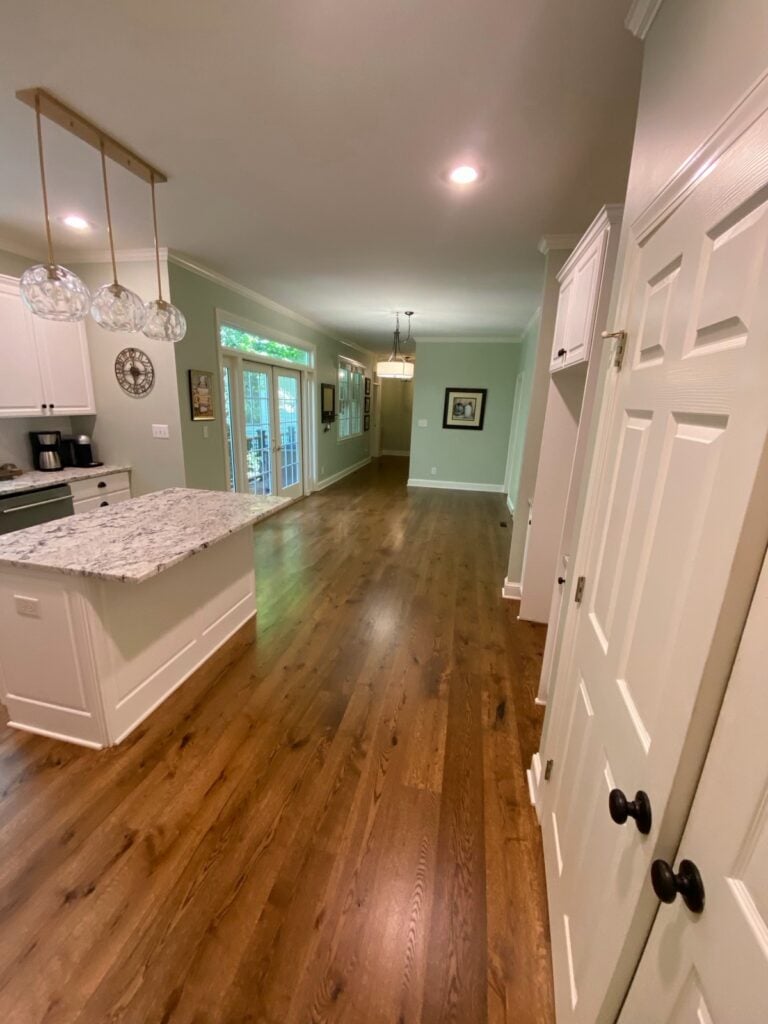
Most Triangle homes now have open floor plans, where the kitchen runs straight into the dining and living areas. Running the same hardwood through all of them makes the space feel larger and more finished. With site-finished hardwood, the new kitchen floor can be stained to match the floors next to it, so there is no visible line where one room ends and the next begins.
It’s comfortable to stand on
Wood has a little give and stays warmer underfoot than tile or stone. If you spend a lot of time cooking, your feet and back will notice the difference. A dropped glass is also more likely to survive a wood floor than a tile one.
It can be renewed instead of replaced
This is hardwood’s biggest advantage over almost every other kitchen floor. When the area in front of the sink or stove starts to look worn, it can be refreshed. A buff and recoat restores a dull finish, and a full sand and refinish removes scratches and lets you change the color entirely. Solid hardwood can be refinished many times over its life. Tile, vinyl and laminate have to be torn out and replaced once they wear.
It’s easy to keep clean
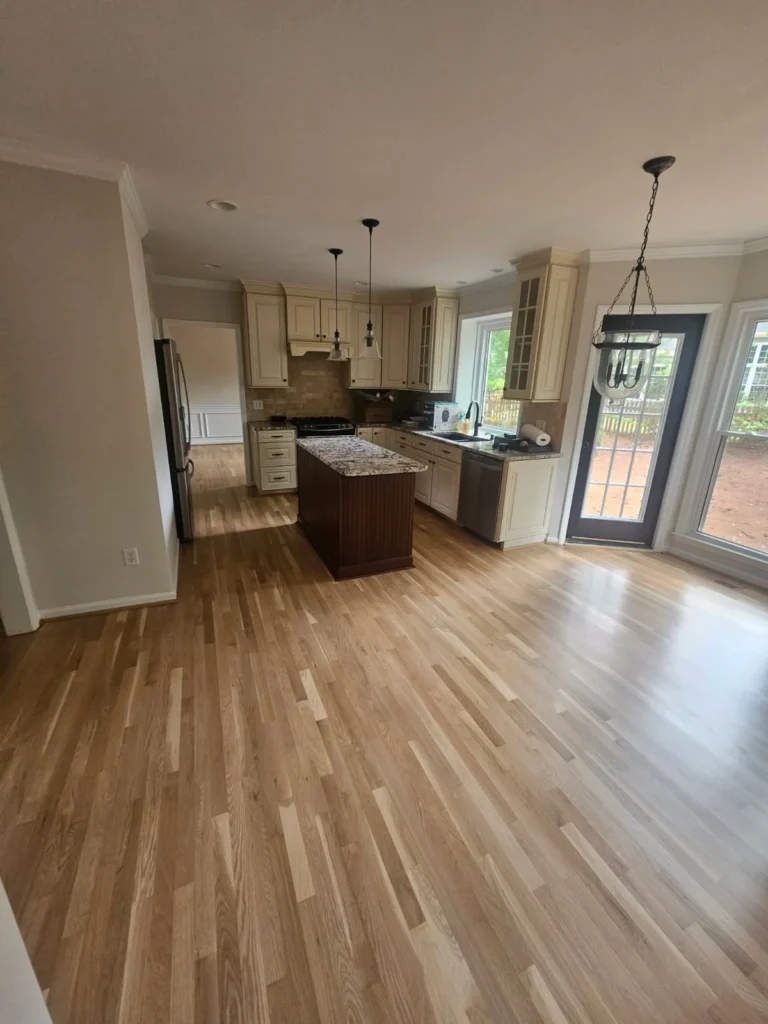
There are no grout lines to scrub. Daily care is a sweep or a vacuum with a hard-floor setting, plus a lightly damp mop with a cleaner made for wood floors when needed. Our guide to cleaning hardwood floors covers the details.
It’s a feature buyers look for
Hardwood is one of the most requested features in home listings, and a continuous wood floor through the main living areas is a strong selling point. If you plan to sell in the next several years, hardwood in the kitchen is rarely a decision you’ll regret.
Cons of hardwood floors in the kitchen
Water is its biggest weakness
Everyday spills are not the real risk. Wiped up promptly, they won’t hurt a properly finished floor. The danger is water that sits: a slow leak under the dishwasher, a dripping ice-maker line behind the refrigerator, or a sink cabinet leak nobody notices for weeks. Standing water seeps into the seams between boards and can cause cupping, warping and staining. In a kitchen, a leak you catch early is a minor repair. A leak you find late can mean replacing boards.
It can scratch and dent
Dropped cast iron, sliding barstools and dog claws all leave marks. How much they show depends on the species, the color and the sheen. Softer woods dent more easily, and dark, glossy floors show every scratch. Light to medium colors in a satin or matte finish hide everyday wear far better.
It costs more than many alternatives
Hardwood usually costs more up front than luxury vinyl plank or basic tile. Over the life of the floor, the gap narrows, because hardwood can be refinished several times instead of being replaced.
High-traffic spots wear first
The floor in front of the sink, stove and refrigerator takes the most traffic, so its finish wears faster than the rest of the room. Plan on a buff and recoat in those areas sooner than you would in a bedroom.
How to make hardwood work in your kitchen
Choose a harder species
Wood hardness is measured with the Janka hardness test. The higher the number, the better the wood resists dents. Here is how the species we install most often compare:
| Species | Janka rating | In a kitchen |
|---|---|---|
| Hickory | 1,820 | Very hard, and its strong grain hides wear well |
| Hard maple | 1,450 | Hard, but its smooth grain shows scratches more |
| White oak | 1,360 | Hard, with a tighter cell structure that resists moisture better than red oak |
| Red oak | 1,290 | The classic choice, with grain that hides everyday marks |
| American walnut | 1,010 | Beautiful, but soft enough to dent more easily |
Hardness helps with dents, but the finish takes most of the daily wear. A well-finished red oak floor will outlast a poorly finished hickory one.
Get the finish right
For kitchens, we recommend a professional-grade water-based polyurethane, applied in two to three coats. A satin or matte sheen hides scratches and footprints far better than gloss. Site-finished floors have another advantage in a kitchen: the finish is applied after installation, so it bridges the seams between boards and helps keep spills on the surface.
Prefinished hardwood has a very hard factory finish and installs faster. Its small beveled edges can catch crumbs and let liquid sit in the seams, so wipe up spills quickly. Our guide to prefinished vs. unfinished hardwood compares the two in more detail.
Solid or engineered?
Both work in kitchens, and we install solid and engineered hardwood. Solid hardwood can be refinished more times, which matters in a room that sees heavy wear. Engineered hardwood has a real wood top layer over a stable core, so it moves less with changes in humidity and is the better choice over a concrete slab or in a basement kitchen.
Plan for Triangle humidity
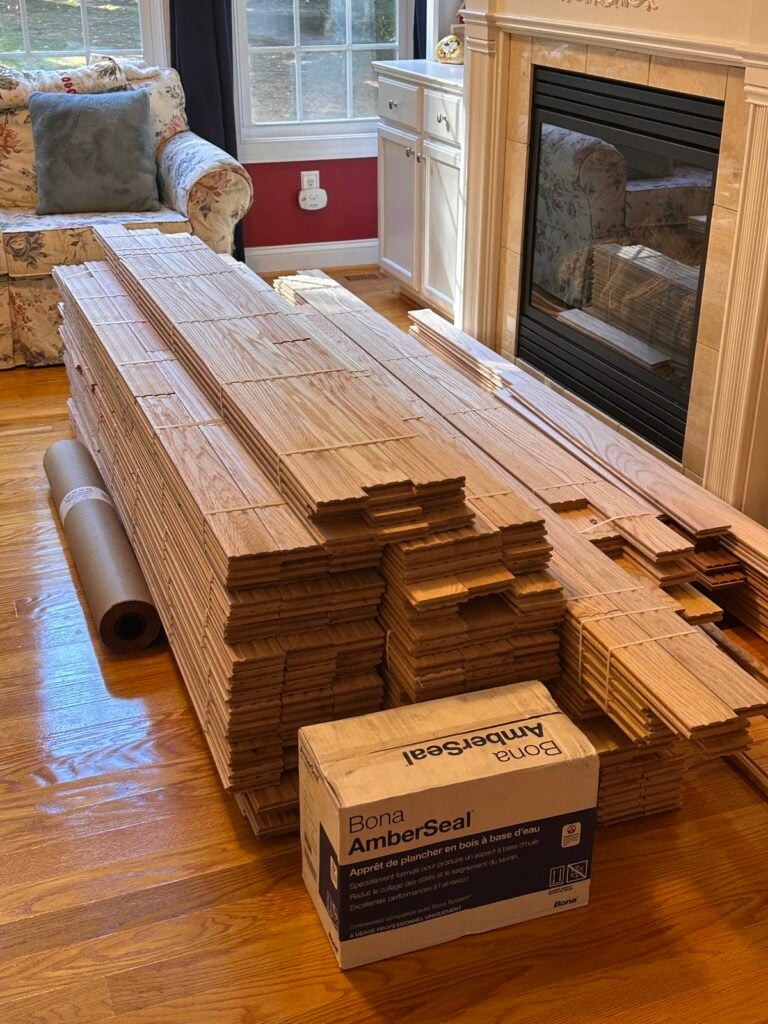
North Carolina summers are humid, and wood expands and contracts with the seasons. That’s why we let the flooring acclimate inside your home before installation, leave the right expansion gaps and recommend keeping your HVAC running year-round. Indoor humidity of roughly 35 to 55 percent keeps hardwood stable and helps prevent gaps in winter and cupping in summer.
Protect the wet zones
- Put a washable rug with a breathable backing in front of the sink. Avoid rubber-backed mats, which trap moisture against the wood.
- Add felt pads to chairs and barstools, and replace them when they wear down.
- Place an inexpensive water-leak sensor under the sink and behind the dishwasher. It’s the single best protection for a kitchen hardwood floor.
- Wipe up spills right away, and never use a soaking-wet mop or a steam mop on hardwood.
See the color before you commit
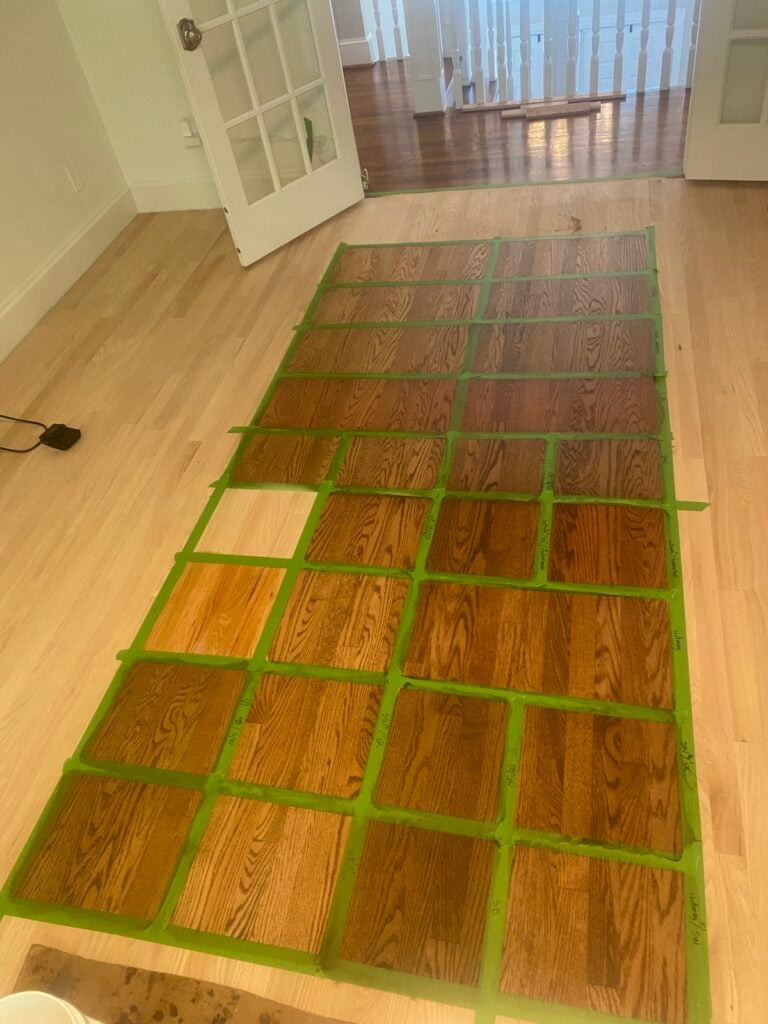
Kitchen lighting, cabinets and countertops all change how a stain looks. On every job, we put a sample down on your actual floor so you can see the final look before we finish. If you’re staining, that means testing your top colors side by side. For a natural floor, we still put down a sample of the clear finish.
Hardwood vs. other kitchen flooring
| Hardwood | Luxury vinyl plank | Tile | |
|---|---|---|---|
| Water resistance | Good with a quality finish and quick cleanup | Waterproof | Waterproof, though grout can stain |
| Comfort underfoot | Warm, with a little give | Warm and soft | Hard and cold |
| When it wears | Sand and refinish | Replace planks | Replace tiles and regrout |
| Look and feel | Real wood | Wood look | Many styles |
| Flow into other rooms | Seamless with hardwood elsewhere | Changes material at the doorway | Changes material at the doorway |
If your kitchen sees constant water, or it’s in a basement, luxury vinyl plank is often the smarter choice. Many homes use hardwood in the kitchen and living areas and LVP in laundry rooms and bathrooms.
What does hardwood in a kitchen cost?
Most site-finished hardwood installations in the Raleigh-Durham area run $13 to $17 per square foot, including materials and labor. For a 200-square-foot kitchen, that’s roughly $2,600 to $3,400. Removing old flooring, repairing the subfloor or adding stairs adds to the total. For the full breakdown, see our guide to hardwood flooring installation cost in Raleigh.
Is hardwood right for your kitchen?
Hardwood is a great fit if:
- Your kitchen opens into rooms that already have hardwood, or will.
- You want a floor that can be refinished instead of replaced.
- You’re comfortable wiping up spills and using rugs in the wet zones.
Consider luxury vinyl plank instead if:
- The kitchen is in a basement or sits directly on a concrete slab with moisture issues.
- You have large dogs, a busy household and little patience for floor care.
- Budget is the top priority.
Frequently asked questions
Can you put hardwood flooring in a kitchen?
Yes. With a durable finish, a harder species and quick cleanup of spills, hardwood performs well in most kitchens. The main risk is water that sits unnoticed, such as a slow dishwasher or sink leak.
What is the best hardwood for a kitchen?
Harder species with visible grain, like hickory, white oak and red oak, hide everyday wear best. White oak is a popular kitchen choice because its tighter cell structure resists moisture better than red oak. A satin or matte water-based finish matters as much as the species.
Is engineered hardwood better than solid in a kitchen?
Engineered hardwood moves less with humidity changes and is the better choice over a concrete slab or in a basement. Solid hardwood can be refinished more times. Both work well in most Triangle kitchens.
How do I protect hardwood floors in my kitchen?
Use a breathable rug at the sink, felt pads on chairs and stools, and a leak sensor under the sink and dishwasher. Wipe up spills right away, avoid steam mops, and keep indoor humidity around 35 to 55 percent.
Can water-damaged kitchen hardwood be repaired?
Often, yes. Mild cupping can settle once the floor dries out. Boards that are stained, warped or soft can be replaced, and the area is then sanded and refinished so the repair blends in.
How often should a kitchen hardwood floor be refinished?
A buff and recoat every few years keeps the finish healthy in a busy kitchen. A full sand and refinish is typically needed every 7 to 10 years, sooner in high-traffic homes.
Still deciding? Jason handles every estimate personally. He’ll look at your kitchen, bring samples and give you an honest recommendation, whether that’s hardwood or something else. Request your free in-home estimate or call (919) 422-0254.
Share this article